
How to Know if Your Olive Oil Is Real
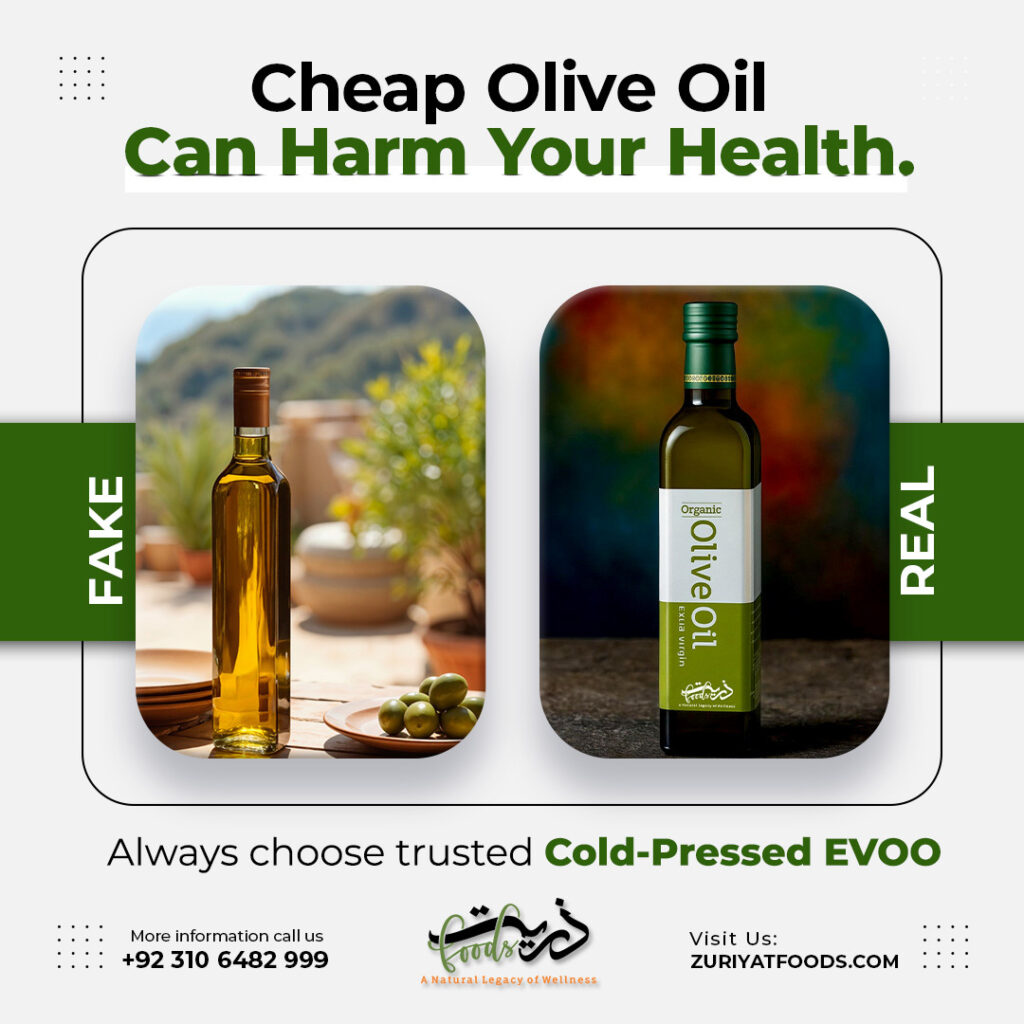
Many olive oils sold today aren’t truly extra virgin. Some producers mix cheaper refined oils or mislabel the grade. This guide explains how to check if olive oil is real or fake using simple at-home tests and visual clues. Learn to identify genuine olive oil by its taste, texture, and behavior in different conditions.

What happens if I store olive oil in the refrigerator?
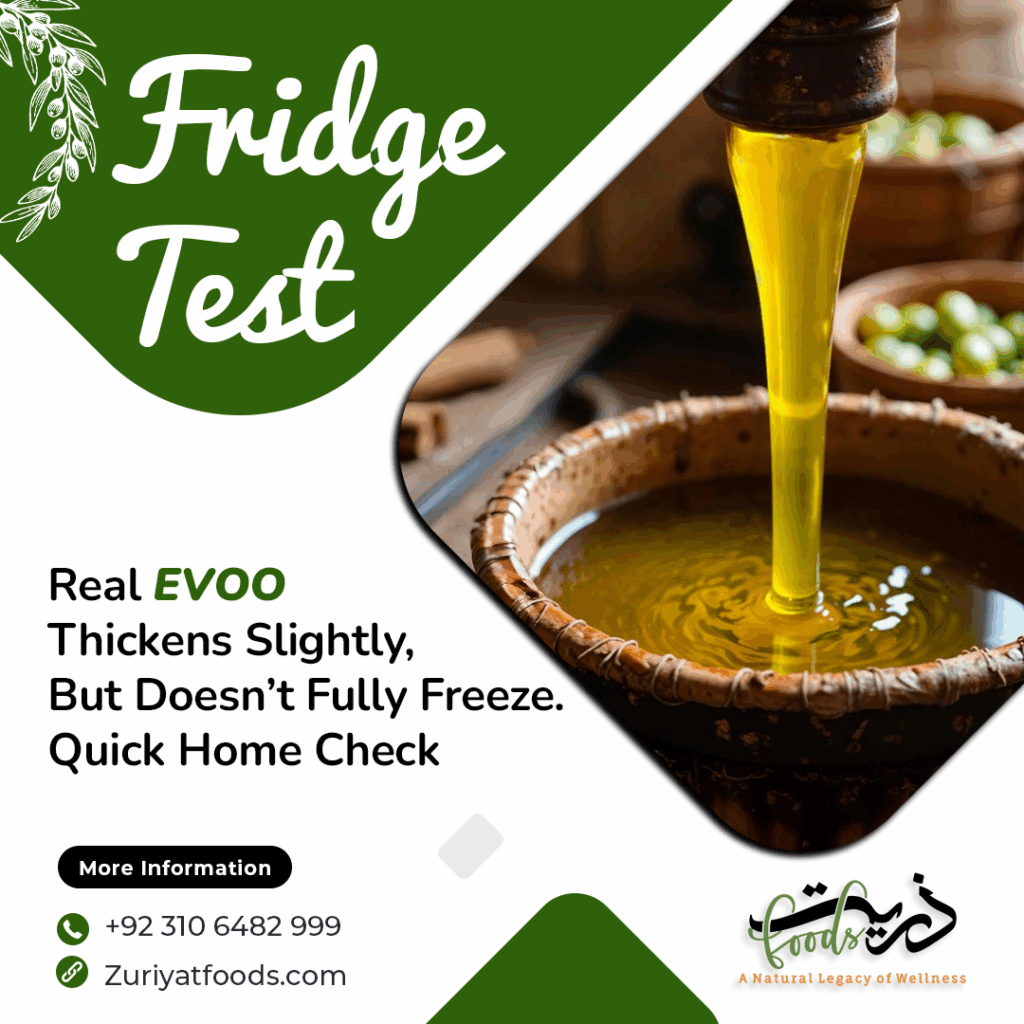
When you chill pure extra-virgin olive oil in the refrigerator, it thickens or turns cloudy. If it stays clear and watery, it likely contains refined or seed oils.
Does real olive oil burn like other cooking oils?
No. Genuine extra virgin olive oil has a higher smoke point and a clean, non-chemical smell when heated. If your oil smokes quickly or smells like plastic, it’s impure.
How can I test olive oil purity at home?
Pour some into a glass and place it in the fridge for 24 hours. Pure olive oil will solidify slightly but not freeze rock hard. Adulterated oils often stay liquid.
Why does real olive oil sting a little in the throat?
That peppery “sting” is a sign of natural antioxidants and polyphenols. If your oil has no kick or tastes bland, it might be old, refined, or fake.
Should genuine olive oil be green in color?
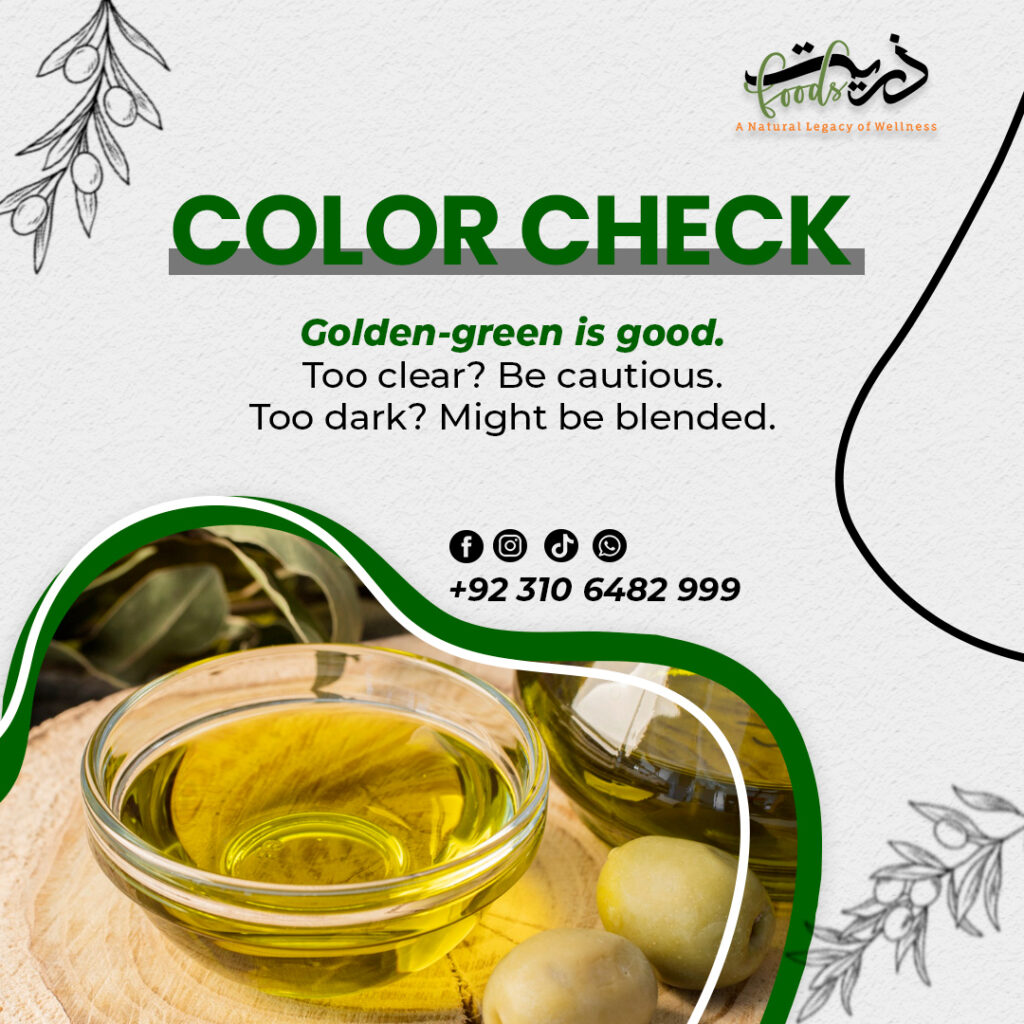
Not necessarily. Real olive oil can range from golden yellow to deep green depending on olive type and harvest time. Color alone isn’t proof—but dull or overly clear oil can be suspicious.
What is the paper test for olive oil authenticity?
Drop a little oil on white paper. Real olive oil leaves a light yellow stain that doesn’t spread quickly. Mixed oils soak in fast and may leave a transparent ring.
How do certified brands prove purity?
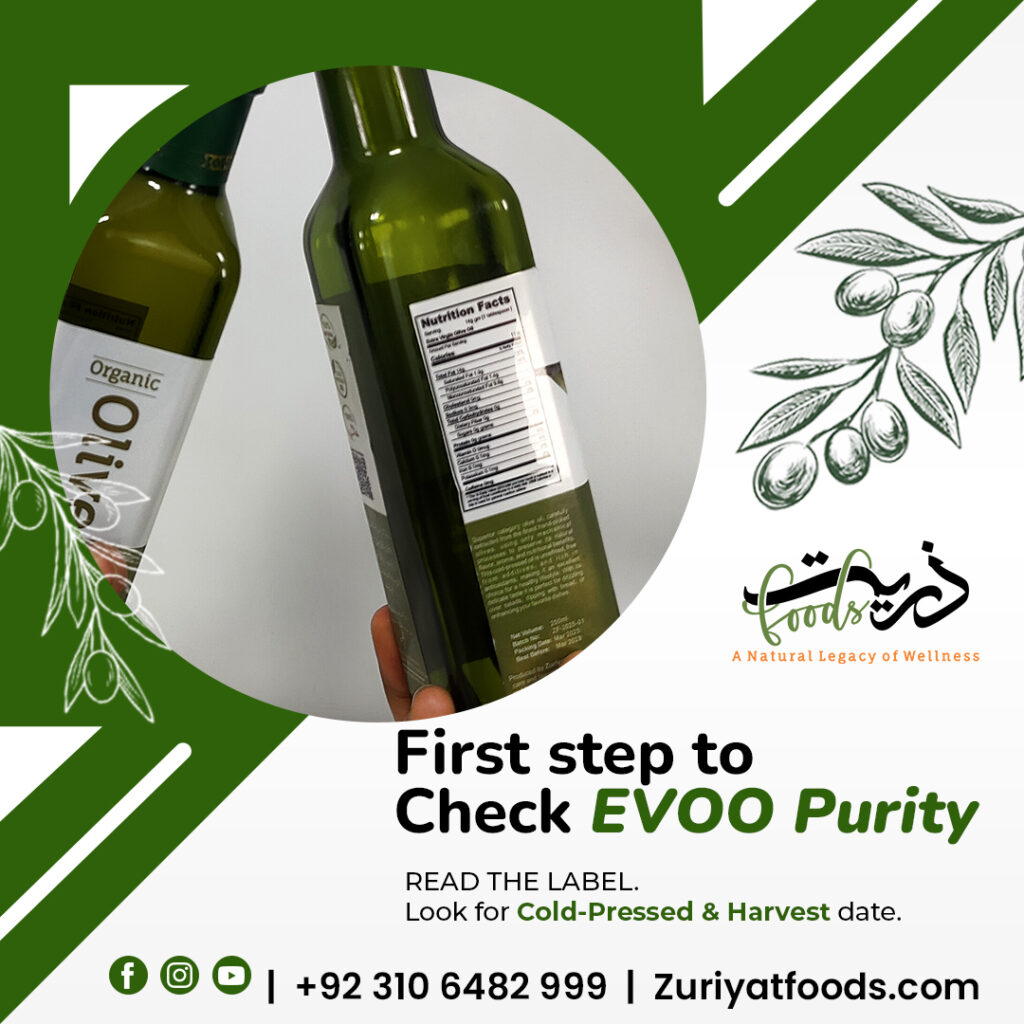
Look for certifications like cold-pressed, first extraction, or lab-tested acidity below 0.8%. Zuriyat Foods Extra Virgin Olive Oil passes purity and peroxide tests before bottling.