
The Mediterranean Diet and Olive Oil Connection
What makes the Mediterranean diet so powerful—and where does olive oil fit into it all?
The Mediterranean way of eating is one of the most studied diets in the world. And at the heart of this celebrated eating pattern lies one golden ingredient: olive oil .
In this article, we’ll explore the essential link between olive oil in Mediterranean diet traditions, the role of healthy fats in Mediterranean food , and how to use this oil in everyday cooking.
What Is the Mediterranean Diet?
The Mediterranean diet is a way of eating inspired by the traditional food cultures of countries like Greece, Italy, and southern Spain. It emphasizes:
- Fresh vegetables and fruits
- Whole grains and legumes
- Nuts and seeds
- Lean proteins (especially fish)
- Extra virgin olive oil as the primary fat source
It’s more than just food—it’s a lifestyle rooted in simplicity, balance, and seasonal, unprocessed ingredients.
Why Olive Oil Is the Cornerstone
When we talk about olive oil in Mediterranean diet philosophy, we’re talking about the primary source of fat used in nearly every dish. But it’s not just about taste—it’s about nourishment.
Extra virgin olive oil is rich in:
- Monounsaturated fats, mostly oleic acid
- Antioxidants like polyphenols and vitamin E
- Other plant compounds, such as oleocanthal, which gives it its peppery taste
Whether it’s drizzled over salads, stirred into soups, or used in light sautéing, olive oil helps make meals both flavorful and functional.
Why the Fat Matters
Much of what is written about this way of eating comes back to its fat: most of it is extra virgin olive oil, used in place of butter and ghee.
Healthy Fats in Mediterranean Food
Contrary to popular diet myths, not all fats are bad. The Mediterranean diet is built on them.
Key sources of healthy fats in this diet include:
- Olive oil
- Nuts and seeds
- Fatty fish like salmon and sardines
These fats:
- Make meals more satisfying
- Aid absorption of fat-soluble vitamins (A, D, E, K)
Olive oil, in particular, offers a smooth balance of flavor and function—making it a staple across all meals.
Why Olive Oil Is Used in Mediterranean Meals
Still wondering why olive oil is used in Mediterranean meals instead of butter or other oils?
- It withstands moderate heat for light cooking
- Enhances natural food flavors without overpowering them
- Unrefined, so it keeps the taste of the olive
- Easily blends into both savory and sweet dishes
From breakfast toast to dinnertime roasted vegetables, extra virgin olive oil is a daily companion—not an occasional add-on.
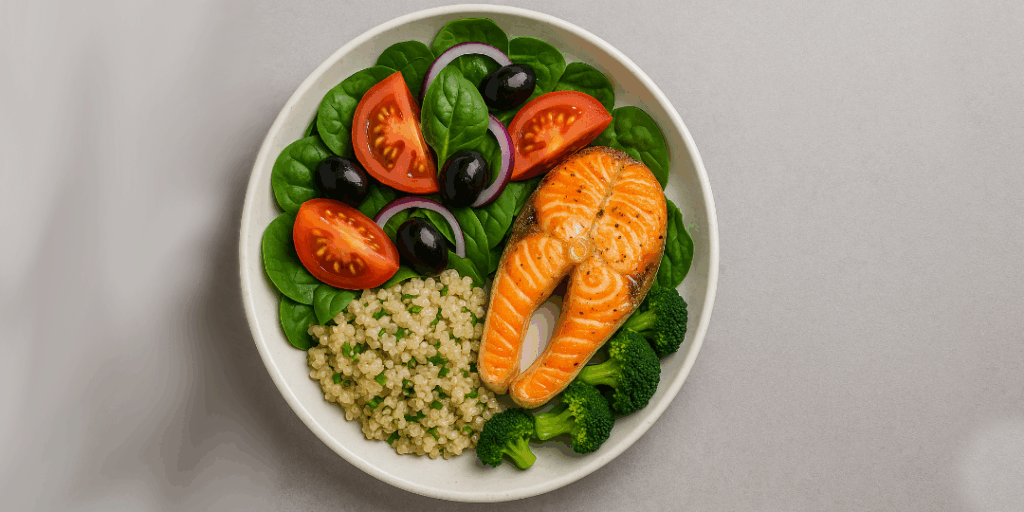
Extra Virgin Oil and Diet Plan Synergy
If you’re building a long-term diet plan that doesn’t sacrifice taste, olive oil is a good place to start.
Here’s how to integrate it:
- Use it in everyday cooking and dressings, measured with a spoon
- Replace butter and ghee with olive oil when possible
- Choose cold-pressed, unrefined oil for the fullest flavour
- Pair with fiber-rich foods like leafy greens or whole grains
Tip: Balance is key—olive oil should be used thoughtfully as part of an overall whole-foods approach.
Curious about the broader health effects of olive oil beyond the Mediterranean context? Read our Olive Oil Health Benefits: What the Evidence Supports.
Nourish Like the Mediterranean: Your Daily Oil Ritual
In the Mediterranean kitchen, olive oil is the everyday fat: in dressings, for light cooking and to finish a dish. The same habits work in any kitchen.
Zuriyat’s cold-pressed extra virgin olive oil is crafted to fit perfectly into any Mediterranean-style lifestyle. Taste the quality, live the difference.